

2026 Tax incentives for Industry 4.0 machinery: an opportunity for the Italian market

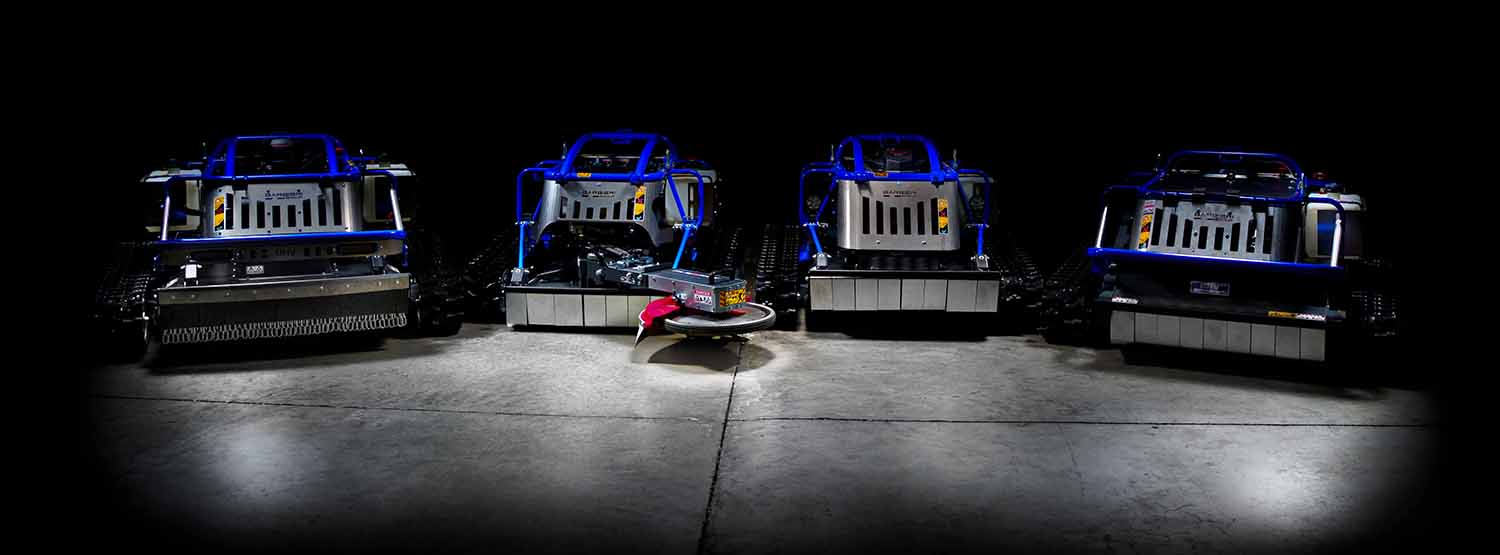
Starting from June 2026, for many Italian companies, investing in new, innovative and interconnected machinery may represent not only a technical and production-related choice, but also a concrete tax opportunity. For those operating in the Italian market, the purchase of capital goods that meet the requirements set out by the regulations may translate into a significant economic advantage, helping to reduce the overall cost of the investment.
In this context, Barbieri remote-controlled machines and loaders fit perfectly into a logic of innovation, efficiency and process digitalization, offering companies an advanced operational tool and, at the same time, a potential tax leverage to be carefully evaluated.
An opportunity to be considered only for the Italian market
It is important to clarify from the outset that this overview applies exclusively to the Italian market. The tax opportunities described refer to the regulatory and tax framework applicable in Italy and cannot automatically be extended to other countries.
For this reason, any assessment of the actual eligibility for the benefit must be made by considering the company’s tax position in Italy and consulting a trusted advisor.
Why tax incentives are strategic for companies
When a company invests in new machinery, the key issue is not only the purchase price. Increasingly, the decision is influenced by factors such as:
- operational efficiency;
- workplace safety;
- reduced execution times;
- medium- and long-term investment sustainability;
- potential tax incentives for capital goods.
This is exactly where the value of a tax incentive comes into play: reducing the economic weight of the investment and making the adoption of advanced technologies more accessible.
Industry 4.0 machinery and tax benefits: what it really means
In the Italian context, capital goods that meet specific technological requirements may fall within the scope of eligible assets. In particular, machinery capable of communicating with company systems, collecting data, being monitored and integrating into production processes becomes especially relevant.
For many companies, this means that investing in machinery should not be seen merely as the purchase of an operational asset, but as part of a broader path of technological transition, with potential benefits also from a tax perspective.
In other words, technology does not only improve work in the field: it can also help improve the economic sustainability of the investment.
Remote-controlled machines and loaders: innovation, efficiency and business vision
Barbieri remote-controlled machines and Barbieri loaders respond to increasingly widespread needs in the professional sector: working with greater precision, safety and efficiency, even in complex environments or spaces that are difficult to manage with traditional machinery.
These features make them particularly interesting for companies that want to:
- increase productivity;
- reduce margins of error;
- improve operational control;
- invest in advanced machines aligned with corporate innovation processes.
When these elements are combined with the possibility of accessing a tax incentive, the value of the choice becomes even clearer.
Tax benefits as a driver of competitiveness
For an Italian company, being able to rely on a tax advantage linked to the purchase of machinery means freeing up resources, planning investments more effectively and strengthening competitiveness.
This is not merely an accounting matter. It is a strategic lever that can help the company to:
- renew its machinery fleet;
- accelerate the adoption of more advanced technologies;
- improve work organization;
- face the market with more high-performing tools.
In a context where efficiency and innovation increasingly make the difference, choosing an advanced machine can become an advantage from multiple points of view.
An investment to be carefully evaluated
Naturally, every company situation is different. The actual tax benefit may vary depending on the company’s legal form, the applicable tax regime and the specific characteristics of the investment.
For this reason, when discussing 2026 tax incentives for Industry 4.0 machinery, it is essential to combine the technical evaluation with an accurate tax assessment. Only in this way is it possible to understand the real economic advantage for the individual business.
Why this topic is central in 2026
2026 is shaping up to be a particularly interesting year for all Italian companies planning investments in capital goods. In a market that requires increasingly efficient, connected and versatile machines, combining technological innovation with a tax advantage represents a highly valuable opportunity.
For those looking to the future with an entrepreneurial mindset, investing in advanced machines does not simply mean purchasing equipment: it means building a stronger, more modern and more competitive growth process.
In summary
For the Italian market, tax incentives linked to technologically advanced machinery represent a lever to be considered very carefully. In this scenario, Barbieri remote-controlled machines and loaders stand out as solutions capable of combining performance, innovation and strategic vision.
Evaluating this type of investment today means looking beyond the initial cost and considering all the related benefits: operational, organizational and, where applicable, fiscal.
Before proceeding, it is always advisable to consult your tax advisor, in order to verify the actual applicability of the incentive to your specific business situation.